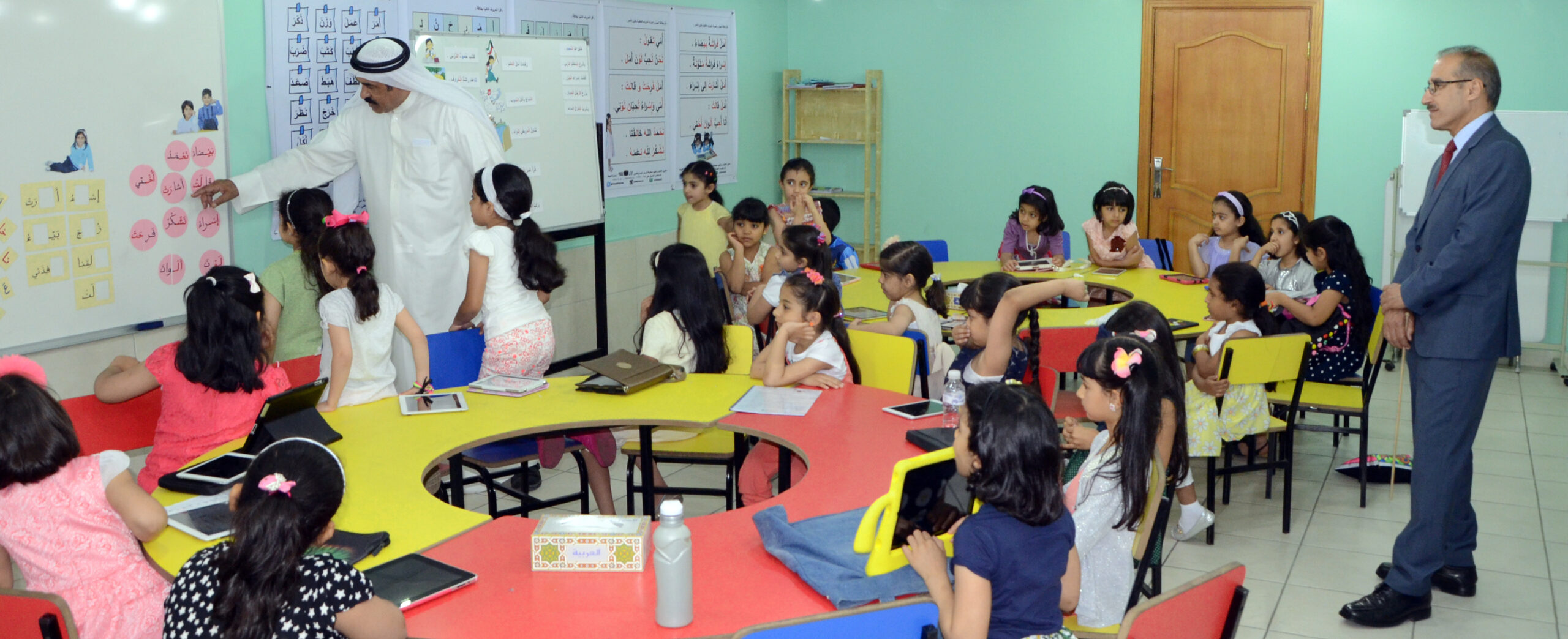
The Linguistic Creativity Center has been operating within the Women’s Cultural and Social Society since 1998. It aims to teach and train children in Arabic language skills rom an early age, using an approach adapted to the cognitive and emotional needs of childhood. Located adjacent to the Society’s headquarters and supervised by Professor Hamza Al-Khayyat, the Center operates throughout the week with both morning and evening sessions. With a strong focus on inclusivity—particularly in supporting the female child—the Center contributes directly to Sustainable Development Goal 4, which calls for ensuring inclusive and equitable quality education and promoting lifelong learning opportunities for all.
Results
- Improving Arabic language skills: Significant development of children’s reading, writing, and pronunciation abilities.
- Providing an interactive learning environment: Creating an interactive educational environment that encourages children to love the Arabic language.
- Developing children’s abilities: Enhancing critical and creative thinking skills in children through language activities.
- Improving school performance: Helping children achieve better performance in Arabic language subjects at school.
- Enhancing cultural identity: Instilling cultural and national values in children through learning the Arabic language and understanding its importance in their daily lives.
Impact
- Developing communication skills: Empowering children to communicate better in Arabic, contributing to their academic and social success.
- Raising educational standards: Contributing to raising the linguistic educational standards of children, which positively impacts their overall academic achievement.
- Encouraging community participation: Enhancing children’s participation in cultural and social activities that require advanced language skills.
- Strengthening national identity: Reinforcing children’s cultural and national ties through their learning of the Arabic language and understanding its importance.
Role of the Women’s Cultural and Social Society
- Establishing and managing the center: Establishing the Linguistic Creativity Center and providing the necessary resources to ensure its continuity and success.
- Providing educational expertise: Employing qualified and specialized educational staff to teach Arabic to children.
- Organizing innovative educational programs: Developing and implementing innovative educational programs tailored to the needs and abilities of children.
- Supporting continuous learning: Providing a supportive environment for continuous learning through the activities and programs offered by the center.
- Promoting the importance of the Arabic language: Emphasizing the importance of the Arabic language in enhancing children’s cultural and national identity.